You’ve launched your startup, built an amazing product, but there’s one problem: no one knows you exist. The easiest solution seems obvious—run paid ads. But what if you don’t have thousands of dollars to burn on Facebook Ads or Google campaigns that might not even convert?
Here’s the truth: 70% of startup founders waste their limited budget on paid advertising before building a sustainable organic traffic foundation. The result? Short-term spikes followed by crickets the moment ad spend stops.
This guide will show you exactly how to build consistent, long-term traffic through organic strategies that compound over time. You’ll learn proven methods used by successful startups to attract thousands of visitors without spending a dollar on ads.
Organic traffic growth is a strategic approach that helps startups attract website visitors through unpaid channels like search engines, social media, and content marketing. It includes key elements such as SEO optimization, valuable content creation, community engagement, and strategic partnerships. When implemented correctly, organic growth improves brand authority, customer acquisition costs, and long-term business sustainability.
What Is Organic Traffic Growth for Startups
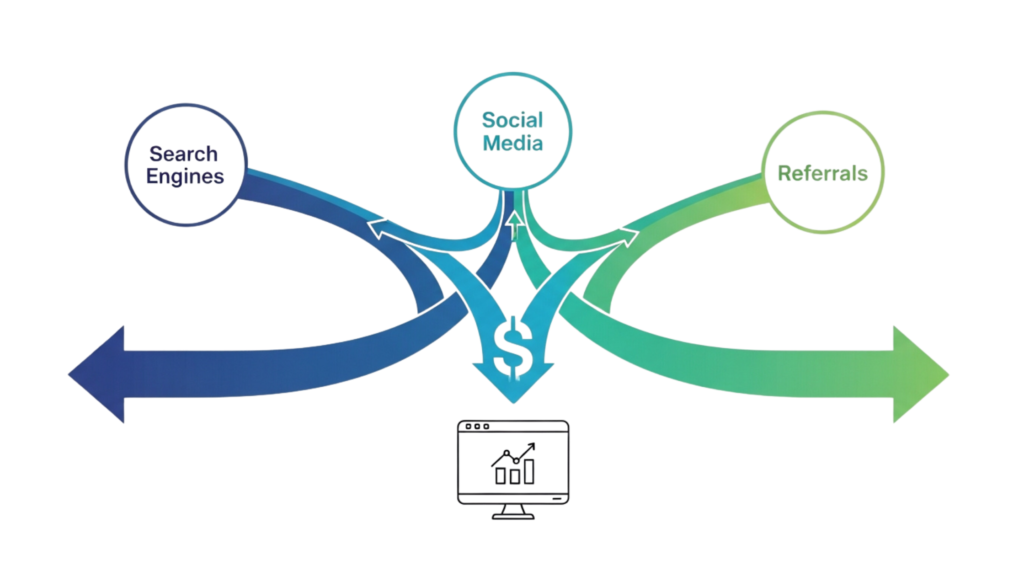
Organic traffic refers to visitors who find your website through unpaid channels—primarily search engines, social media shares, direct visits, and referrals. Unlike paid traffic that disappears when your budget runs out, organic traffic builds momentum over time.
For startups, organic growth matters because it creates sustainable acquisition channels that don’t depend on continuous cash injections. Every piece of content you create becomes a permanent asset that can attract visitors for months or years.
The fundamental difference from traditional marketing: Old-school approaches relied on interruption and broadcasting. Modern organic growth focuses on being found when people actively search for solutions. You’re not pushing messages—you’re positioning yourself where your ideal customers already look.
Organic channels typically include search engine traffic through SEO, social media engagement, email marketing from earned subscribers, referral traffic from other websites, and direct traffic from brand awareness.
Trends Shaping Organic Traffic Growth
Understanding current trends helps you prioritize the right strategies.
AI-powered search is transforming discovery. Search engines now prioritize content that demonstrates genuine expertise and provides comprehensive answers. Google’s helpful content update specifically targets thin content created solely for rankings. This shift means quality and depth matter more than keyword stuffing.
Video content dominates attention. Short-form video on platforms like TikTok, Instagram Reels, and YouTube Shorts generates significantly higher engagement rates than static posts. Industry data shows that video content receives 1200% more shares than text and images combined. Startups leveraging video see faster organic growth across multiple platforms.
Voice search changes query patterns. With smart speakers in millions of homes, search queries have become more conversational. People ask complete questions rather than typing short keywords. Optimizing for natural language and featured snippets captures this growing traffic source.
Community-first platforms are rising. Platforms like Reddit, Discord, and niche forums are experiencing renewed growth as people seek authentic conversations over polished social media feeds. Startups that genuinely participate in relevant communities build credible brand presence and referral traffic.
Zero-click searches require adaptation. More searches now end on Google itself through featured snippets and knowledge panels. While this reduces click-through rates, ranking in these positions establishes authority. Smart startups optimize for snippets while using them as brand awareness tools.
Expert Insights on Sustainable Growth
From real-world experience implementing these strategies across multiple startups, certain principles consistently drive results.
Focus on one channel until it works. The biggest mistake startups make is spreading efforts across too many platforms simultaneously. Successful companies identify one primary channel—whether that’s SEO, a specific social platform, or community building—and dominate it before expanding elsewhere.
Create content that solves specific problems. Generic “what is” articles rarely gain traction in competitive spaces. Content that addresses specific use cases, implementation challenges, or comparison questions attracts more engaged visitors who are closer to making decisions.
Distribution matters as much as creation. Publishing great content means nothing if no one sees it. Top-performing startups allocate equal time to content distribution—sharing in communities, engaging with influencers, repurposing across platforms, and building backlinks.
Optimize for people first, algorithms second. Search algorithms increasingly reward content that genuinely helps users. Metrics like time on page, bounce rate, and return visits signal content quality. Focus on creating genuinely valuable resources rather than gaming ranking factors.
Leverage existing audiences strategically. Rather than building everything from scratch, smart startups appear where their audience already congregates. This includes guest posting on established blogs, participating in podcasts, answering questions on platforms like Quora, and contributing to industry publications.
Practical Implementation Guide
Here’s your step-by-step roadmap to build organic traffic without paid ads.
Step 1: Define your ideal customer profile precisely. You can’t attract the right traffic without knowing exactly who you’re targeting. Document their specific challenges, the language they use when searching for solutions, where they spend time online, and what content formats they prefer. This foundation informs every subsequent decision.
Step 2: Conduct strategic keyword research. Don’t just chase high-volume keywords that established competitors dominate. Find long-tail keywords with clear intent that you can realistically rank for. Tools like Ubersuggest, AnswerThePublic, and Google’s autocomplete reveal what people actually search for. Look for keywords with 300-3000 monthly searches and low competition.
Step 3: Create comprehensive pillar content. Develop 5-10 in-depth articles that thoroughly cover core topics in your industry. These should be 2000-3000 word guides that become the definitive resource. Each pillar piece should target a primary keyword while naturally incorporating related terms. Structure these for readability with clear headings, short paragraphs, and actionable takeaways.
Step 4: Build topical clusters systematically. Once you have pillar content, create supporting articles that dive deeper into specific subtopics. Link these cluster articles back to your pillar pages and to each other. This internal linking structure signals topical authority to search engines while helping readers discover related content.
Step 5: Optimize technical SEO foundations. Ensure your site loads quickly on mobile devices, uses descriptive URLs and meta descriptions, implements proper heading hierarchy, includes alt text on images, and submits an XML sitemap to search engines. These technical elements directly impact your ability to rank.
Step 6: Actively distribute your content. Share each piece across relevant channels immediately after publishing. Post in niche communities where your audience congregates, but add context and value rather than just dropping links. Reach out to people mentioned in your content. Repurpose key insights into social posts, email newsletters, and other formats.
Step 7: Build strategic backlinks. High-quality backlinks remain a critical ranking factor. Create link-worthy assets like original research, comprehensive tools, or detailed case studies. Reach out to sites that already link to similar content. Contribute expert quotes to journalists through platforms like HARO. Guest post on established industry blogs with relevant audiences.
Best Tools and Resources for Organic Growth
The right tools accelerate your organic growth efforts significantly.
Google Search Console provides essential data on how your site performs in search results. It shows which keywords drive traffic, identifies technical issues, and reveals opportunities to improve rankings. This free tool should be your first installation when starting SEO efforts. Use it to monitor search performance and find optimization opportunities.
Ahrefs or SEMrush offer comprehensive SEO analysis for serious growth. These platforms reveal competitor keywords, backlink opportunities, content gaps, and ranking progress. While they require investment (starting around $99-$119 monthly), the competitive intelligence justifies the cost for content-focused startups. Start with Ahrefs for better backlink data or SEMrush for broader marketing tools.
Canva simplifies visual content creation for non-designers. Eye-catching featured images, social graphics, and infographics dramatically improve content shareability. The free version provides extensive capabilities, while Canva Pro ($12.99 monthly) unlocks brand kits and additional templates. Consistent, professional visuals increase both clicks and social sharing.
Buffer or Hootsuite streamline social media management across multiple platforms. Rather than manually posting everywhere, these tools let you schedule content, analyze performance, and maintain consistent presence. Buffer’s free plan covers basic needs, while paid plans ($6+ monthly per channel) add team collaboration and deeper analytics.
Grammarly Premium ensures your content communicates clearly and professionally. Beyond basic grammar, it catches tone issues, wordiness, and engagement problems that reduce content effectiveness. At $12 monthly for annual plans, the clarity and professionalism improvements directly impact how audiences perceive your expertise.
AnswerThePublic reveals exactly what questions people ask about your topics. This free tool visualizes search query patterns, helping you create content that matches real search intent. Use it during content planning to ensure you’re addressing actual customer questions rather than guessing at what matters.
Real-World Case Studies
Learning from startups that successfully built organic traffic provides actionable insights.
Content marketing case: A B2B SaaS startup in the project management space started with zero organic traffic. They committed to publishing one comprehensive guide weekly, each targeting specific use cases their ideal customers searched for. Within six months, they ranked on page one for 47 keywords, driving 12,000 monthly organic visitors. The key lesson: consistency and specificity beat sporadic generic content.
After implementing this strategy, they focused each article on solving one specific problem rather than broad topics. Articles like “How marketing agencies track client projects” outperformed generic “project management tips” pieces by 400%. This specificity attracted more qualified traffic that converted better.
Community building case: An e-commerce startup selling sustainable products had minimal brand recognition. Rather than competing with paid ads, the founder spent 30 minutes daily genuinely participating in relevant Reddit communities and Facebook groups. She answered questions, shared insights, and occasionally mentioned her products when directly relevant.
Over eight months, this consistent community engagement drove 8,000 visitors through Reddit referrals alone. More importantly, these visitors had 3x higher conversion rates than cold traffic because they’d already built trust through authentic interactions. The takeaway: genuine community participation beats self-promotion.
SEO optimization case: A startup in the competitive fitness space struggled to rank for primary keywords dominated by established brands. They pivoted to target hyper-specific long-tail keywords like “workout routine for desk workers with back pain” rather than “workout routines.”
This focused approach led to rankings for 200+ long-tail keywords within four months. While individual keyword volumes were lower, the cumulative traffic reached 15,000 monthly visitors—and these targeted visitors converted at 2.5x the rate of broader traffic. The insight: specificity often beats volume for early-stage startups.
Key Takeaways
Building organic traffic without paid ads is absolutely achievable for startups with the right strategy and consistent execution.
Focus creates results. Rather than attempting everything simultaneously, dominate one channel completely before expanding. Whether that’s SEO, community building, or content marketing, depth beats breadth in early stages. Master your primary channel before diversifying.
Quality compounds over time. Every piece of valuable content you create becomes a permanent asset attracting visitors for months or years. Unlike paid ads that stop working when spending stops, organic assets generate compounding returns. Invest in creating genuinely helpful resources rather than surface-level content.
Distribution amplifies creation. Publishing great content represents only half the equation. Actively sharing across relevant communities, building backlinks, engaging with your audience, and repurposing into multiple formats dramatically increases each piece’s reach and impact.
Organic growth is a marathon, not a sprint. Set realistic expectations for 6-12 month timelines to see meaningful results. Consistency matters more than perfection. The startups that win with organic growth commit to steady, systematic execution rather than seeking overnight success.
Ready to grow your traffic organically? Download our free Startup Growth Checklist with step-by-step tasks, template outlines, and tracking spreadsheets to implement these strategies immediately. What’s your biggest challenge with organic traffic? Share in the comments below.
Organic growth requires patience but delivers compounding returns. Most startups see initial results within three to four months of consistent effort. Meaningful traffic typically develops within six to nine months, while significant momentum often takes 12-18 months. The timeline depends heavily on competition level, content quality, and implementation consistency. Focus on steady progress rather than overnight success.
Quality beats quantity for organic growth. Starting with 10-15 comprehensive articles that thoroughly cover core topics works better than publishing 50 superficial posts. Each piece should provide genuine value and target specific keywords. After establishing this foundation, maintain consistency with 2-4 new pieces monthly while updating existing content. Results vary depending on competition and promotion efforts.
Absolutely, but requires strategic positioning. Rather than competing head-to-head on broad keywords established brands dominate, target specific niches, use cases, or audience segments they overlook. Create more comprehensive, specific content for these opportunities. Leverage your startup advantage of agility and authentic customer connection. Many successful startups initially grow by owning specific subcategories before expanding.
In early stages, allocate 8-12 hours weekly to organic growth activities. This includes content creation, distribution, community engagement, and technical optimization. As the strategy proves effective, consider hiring dedicated content or marketing help. The key is consistent effort rather than sporadic bursts. Build systems and processes that make organic growth sustainable long-term.
Organic traffic often converts significantly better than cold paid traffic. Visitors who find you through search actively seek solutions to their problems, indicating higher intent. Organic visitors have also typically consumed your content, building trust before conversion. Data from multiple startups shows organic leads converting 2-4x better than cold paid leads, though paid retargeting can achieve similar rates.
Competitive industries require more strategic positioning but organic growth remains possible. Focus on super-specific long-tail keywords major competitors ignore. Create differentiated content types like interactive tools, original research, or detailed implementation guides. Build authority through strategic guest posting and partnerships. Consider targeting geographic or demographic niches initially before expanding.