Are you struggling to reach your target audience in today’s digital-first world? You’re not alone. Over 4.9 billion people use social media globally, yet many businesses fail to tap into this goldmine. The benefits of social media marketing extend far beyond posting photos—they transform how brands connect, sell, and grow. This guide reveals data-backed strategies, real success stories, and actionable tips to help you dominate your market through strategic social media presence.
- What Are the Core Benefits of Social Media Marketing?
- Top 7 Benefits of Social Media Marketing for Business Growth
- Platform-Specific Benefits: Choosing Your Channels
- Real-World Success Stories: Brands Winning With Social Media
- Budget-Friendly Tips to Maximize Social Media ROI
- How to Measure Social Media Marketing Success
- Common Mistakes to Avoid in Social Media Marketing
- The Future of Social Media Marketing: 2025 Trends
- Conclusion
- FAQ
What Are the Core Benefits of Social Media Marketing?
Social media marketing revolutionizes how businesses communicate with audiences. Unlike traditional advertising, it offers two-way conversations, instant feedback, and measurable results. Here’s why it matters:
The primary advantage lies in cost-effective brand building. Small businesses can compete with industry giants using targeted campaigns on platforms like Instagram, LinkedIn, and TikTok. You control your budget while reaching precise demographics.
Another critical benefit involves customer relationship management. Direct messaging, comments, and community building create loyal brand advocates who champion your products organically.
According to HubSpot’s 2024 research, 81% of marketers reported increased website traffic through consistent social media efforts. This statistic alone proves the channel’s viability for modern businesses.
Top 7 Benefits of Social Media Marketing for Business Growth
1. Enhanced Brand Awareness and Recognition
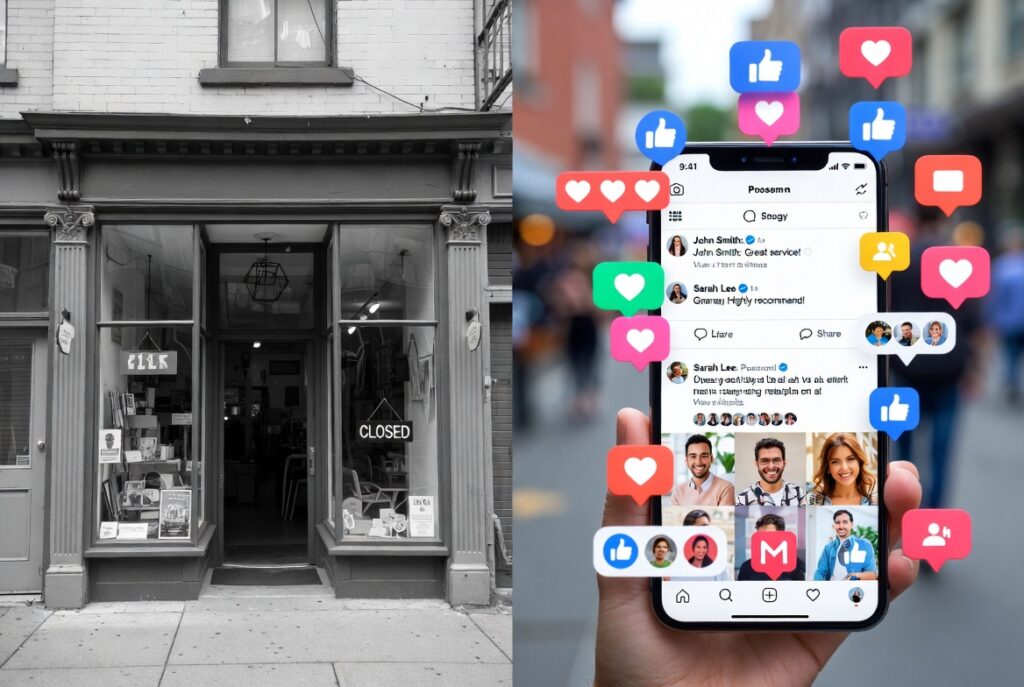
Every post, story, and interaction amplifies your brand visibility. When users engage with your content, their networks see it too—creating exponential reach without additional costs.
Nike’s Instagram strategy exemplifies this perfectly. With 305 million followers, they’ve built a community that doesn’t just buy products but embodies a lifestyle. Their user-generated content campaigns generate billions of impressions annually.
Pro Tip: Use consistent brand colors, voice, and posting schedules to build recognition. According to Sprout Social, brands that post 1-2 times daily see engagement rates increase by 67%.
2. Improved Customer Engagement and Loyalty
Social platforms enable real-time conversations with your audience. Responding to comments, hosting Q&A sessions, and sharing behind-the-scenes content humanizes your brand.
Glossier built a $1.8 billion valuation primarily through Instagram engagement. They don’t just sell beauty products—they co-create with their community, asking followers to vote on new shades and formulas.
Engagement tactics that work:
- Poll stickers on Instagram Stories
- User-generated content campaigns
- Live streaming product launches
- Quick response times (under 2 hours)
3. Cost-Effective Advertising Solutions
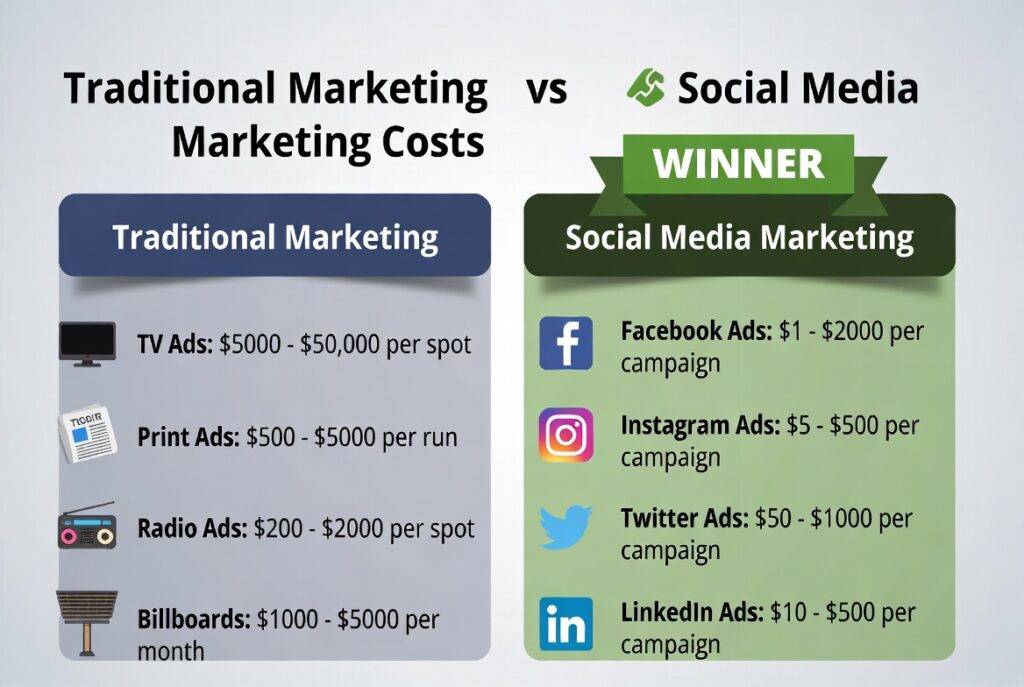
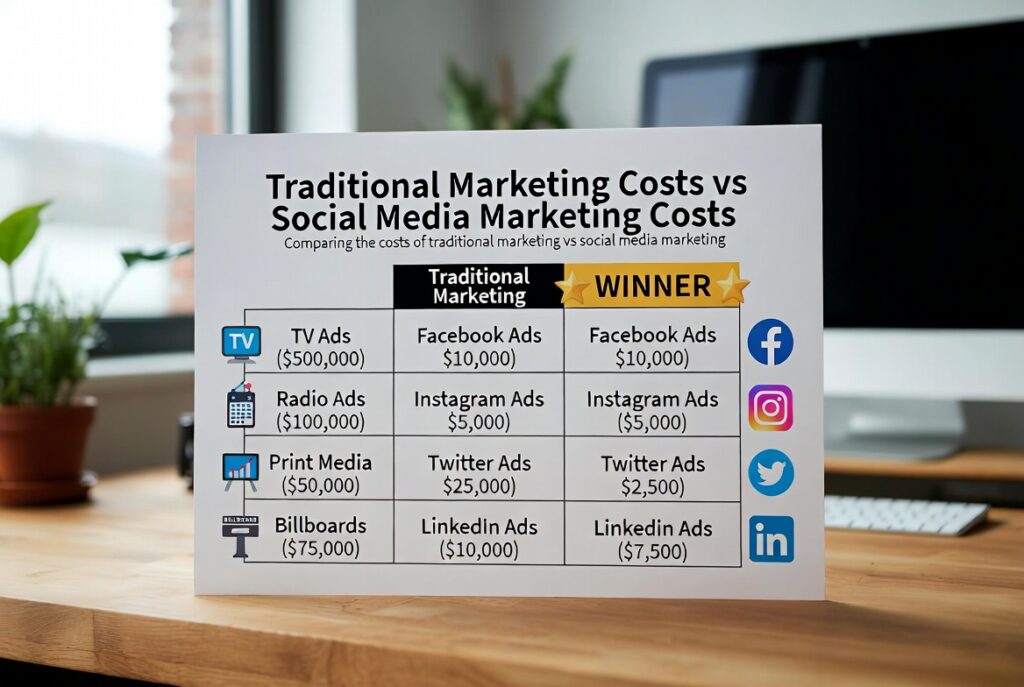
Traditional advertising demands massive budgets. Social media advertising starts at just $5 daily, making it accessible for startups and established brands alike.
Facebook Ads Manager allows micro-targeting based on interests, behaviors, and demographics. A local bakery can target dessert lovers within a 5-mile radius during afternoon hours—precision impossible with billboards or TV ads.
ROI comparison:
- TV commercial: $200,000+ for 30 seconds
- Social media campaign: $500-$5,000 for month-long reach
- Email marketing: $300-$1,000 monthly
- Social media wins on flexibility and targeting accuracy
4. Increased Website Traffic and SEO Rankings
Every social profile acts as an additional gateway to your website. Strategic content marketing through social channels drives qualified traffic that search engines reward.
Buffer’s blog generates 45% of total traffic from social shares. They optimize each post with compelling headlines, visual elements, and clear calls-to-action that encourage clicks.
Traffic-driving strategies:
- Share blog posts with custom graphics
- Use link-in-bio tools like Linktree
- Create video teasers linking to full content
- Implement UTM tracking for analytics
5. Valuable Market Insights and Consumer Feedback
Social listening tools reveal what customers truly think about your brand reputation, competitors, and industry trends. This intelligence informs product development and marketing strategies.
Starbucks monitors social mentions to identify flavor preferences. Their Pumpkin Spice Latte became a cultural phenomenon after social media data showed massive demand for fall-themed drinks.
Tools for market research:
- Hootsuite Insights for sentiment analysis
- Brandwatch for competitor tracking
- Native platform analytics (Facebook Insights, Twitter Analytics)
- Google Alerts for brand mentions
6. Higher Conversion Rates Through Social Proof
User testimonials, reviews, and influencer partnerships build trust faster than corporate advertising. When prospects see real people endorsing your products, skepticism dissolves.
Amazon’s review system generates $2.7 billion annually in additional sales. Social platforms amplify this effect—Instagram shoppable posts convert at 1.08%, double the e-commerce average.
Conversion optimization tactics:
- Feature customer testimonials in Stories
- Partner with micro-influencers (10K-100K followers)
- Use Instagram Shopping tags
- Share case study videos
7. Competitive Advantage in Your Industry
While competitors debate social media’s value, forward-thinking brands dominate the conversation. Early adopters of emerging platforms (like TikTok in 2019) captured massive audiences before saturation.
Chipotle joined TikTok when it had minimal brand presence. Their #ChipotleLidFlip challenge generated 230 million views, establishing them as innovators and attracting Gen Z customers.
Competitive research steps:
- Analyze competitors’ most engaging posts
- Identify gaps in their content strategy
- Monitor their customer complaints for opportunities
- Track their follower growth rates
Platform-Specific Benefits: Choosing Your Channels
Instagram for Visual Brands
Perfect for fashion, food, lifestyle, and beauty industries. Instagram’s shopping features drive direct sales, while Reels capture trending topics.
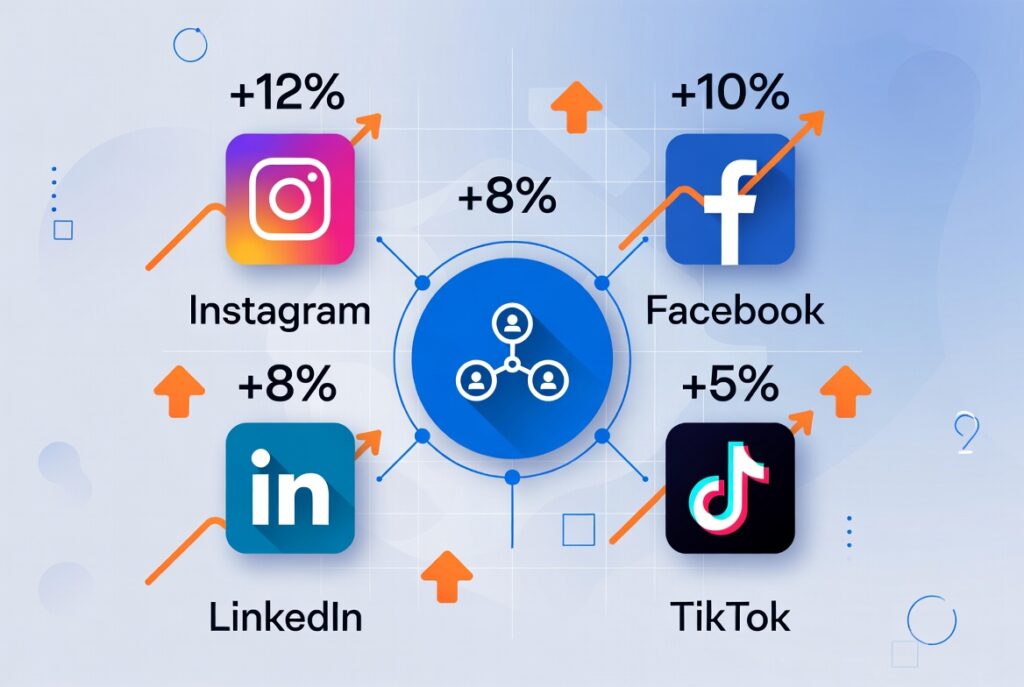
Stats: 200 million users visit at least one business profile daily. Average engagement rate: 1.22%.
LinkedIn for B2B Marketing
The premier platform for professional networking and B2B lead generation. Long-form articles establish thought leadership.
Stats: 94% of B2B marketers use LinkedIn for content distribution. Average conversion rate: 2.74% (highest among social platforms).
TikTok for Viral Reach
Short-form video dominates attention spans. Brands that embrace authenticity over polish see exponential growth.
Stats: Users spend an average 95 minutes daily on TikTok. Ad recall rates reach 17%, 4x higher than other platforms.
Facebook for Community Building
Despite younger demographics shifting away, Facebook Groups create loyal communities. The platform excels for local businesses.
Stats: 1.8 billion people use Facebook Groups monthly. Video content generates 59% more engagement than other post types.
Real-World Success Stories: Brands Winning With Social Media
Case Study 1: Wendy’s Twitter Strategy
Their roast culture generated 1.2 billion impressions in 2024, proving personality beats polish.
Key Takeaway: Authentic brand voice resonates more than corporate speak. They increased followers by 186% in two years.
Case Study 2: Gymshark’s Instagram Growth
This fitness apparel brand grew from zero to $1.3 billion valuation primarily through Instagram influencer partnerships and user-generated content campaigns.
Strategy: They sent free products to micro-influencers, creating authentic testimonials. Their #Gymshark66 challenge drove 50M+ impressions.
Case Study 3: Duolingo’s TikTok Domination
The language app’s unhinged owl mascot content made them TikTok’s favorite educational brand. Videos regularly hit 10M+ views through pure entertainment value.
Result: App downloads increased 62% after viral TikTok presence. Proved educational content can be wildly entertaining.
Budget-Friendly Tips to Maximize Social Media ROI
You don’t need a Fortune 500 budget to see social media marketing benefits. Smart strategies outperform big spending:
Free tactics that work:
- Repurpose blog content into carousel posts
- Use Canva for professional graphics (free plan)
- Engage with 10-15 posts daily in your niche
- Join relevant Facebook and LinkedIn Groups
- Cross-promote across all owned channels
Low-budget paid strategies:
- Boost top-performing organic posts ($20-$50)
- Run A/B tests with $5 daily budgets
- Target lookalike audiences of existing customers
- Focus on one platform initially, then expand
How to Measure Social Media Marketing Success
Vanity metrics (likes, followers) don’t pay bills. Focus on business outcomes:
Key Performance Indicators:
- Conversion rate: Percentage of visitors who purchase
- Click-through rate: How many click your links
- Cost per acquisition: Ad spend divided by customers gained
- Engagement rate: Interactions divided by followers
- Share of voice: Your brand mentions vs competitors
Tools for tracking:
- Google Analytics (free) for website traffic sources
- Native platform analytics for demographic insights
- Hootsuite or Sprout Social for unified reporting
- Hotjar for user behavior analysis
Benchmark goals:
- 1-3% engagement rate (good)
- 0.5-1% conversion rate from social traffic (strong)
- Under $50 cost per acquisition (excellent for most industries)
Common Mistakes to Avoid in Social Media Marketing
1. Inconsistent Posting Schedules
Algorithms reward consistency. Posting daily for a week, then vanishing for two weeks destroys momentum. Use scheduling tools like Buffer or Later.
2. Ignoring Negative Comments
Deleting criticism breeds distrust. Address concerns publicly, take disputes private, and show you value customer feedback.
3. Over-Promotion Without Value
The 80/20 rule applies: 80% educational/entertaining content, 20% promotional. Nobody follows brands for constant sales pitches.
4. Neglecting Video Content
Video generates 1200% more shares than text and images combined. Even low-budget smartphone videos outperform polished photos.
5. Failing to Engage
Social media isn’t a broadcast channel. Respond to comments, ask questions, and participate in your community’s conversations.
The Future of Social Media Marketing: 2025 Trends
AI-Powered Personalization
Chatbots and AI tools now create personalized customer journeys. Brands using AI see 35% higher engagement rates.
Short-Form Video Dominance
TikTok, Instagram Reels, and YouTube Shorts consume increasing attention. Vertical video isn’t optional—it’s essential.
Social Commerce Expansion
In-app purchasing eliminates friction. Instagram Shopping and TikTok Shop allow impulse buying without leaving platforms.
Authentic Influencer Partnerships
Mega-influencers lose effectiveness. Micro and nano-influencers (under 50K followers) deliver 60% higher engagement and stronger trust.
Community-First Strategies
Private groups, exclusive content, and member perks create super fans who defend your brand and drive word-of-mouth growth.Image Prompt: Create a futuristic visualization showing 2025 social media trends with holographic interface elements, AI chatbot illustrations, shopping cart icons integrated with social platforms, and interconnected community nodes in a sleek cyberpunk aesthetic.
Conclusion
Transform Your Business With Social Media Marketing
The benefits of social media marketing extend far beyond basic brand awareness. When executed strategically, social platforms become your most cost-effective customer acquisition channel, loyal community hub, and competitive differentiator.
Start small but start today. Choose one platform where your ideal customers spend time. Post consistently for 90 days. Engage authentically. Track metrics that matter to your bottom line.
Your action plan:
- Audit your current social presence
- Define clear business goals (traffic, leads, sales)
- Create a 30-day content calendar
- Allocate 30 minutes daily for engagement
- Review analytics weekly and adjust
The brands dominating your industry started where you are now. The only difference? They took action while others debated. Your audience is waiting—will you show up? Ready to amplify your social media results? Drop a comment sharing which platform you’ll focus on first, or share this guide with your marketing team to kickstart your strategy today.
FAQ
The primary benefits include increased brand awareness, cost-effective advertising, improved customer engagement, higher website traffic, valuable market insights, better conversion rates through social proof, and competitive advantage in your industry.
Most businesses see initial engagement within 2-4 weeks of consistent posting. Meaningful traffic and sales growth typically manifest after 3-6 months of strategic effort. Social media success compounds over time as your audience grows.
It depends on your audience and industry. Instagram works best for visual brands (fashion, food, lifestyle), LinkedIn excels for B2B services, TikTok captures younger demographics, and Facebook serves local businesses and community building. Start where your customers spend time.
Small businesses can start with $500-$1,000 monthly for ads plus content creation. Mid-size companies typically invest $2,000-$10,000 monthly. Organic strategies cost time rather than money—plan 5-10 hours weekly for authentic engagement.
Absolutely. 91% of B2B marketers use social media for content distribution. LinkedIn generates the highest quality leads, while Twitter and YouTube build thought leadership. B2B social media focuses on education over entertainment.
Track conversions through UTM parameters, monitor cost per acquisition, measure engagement rates, analyze website traffic sources in Google Analytics, and calculate customer lifetime value from social-acquired customers. Focus on business outcomes, not vanity metrics.