Your potential customer opens ChatGPT and asks, “What’s the best marketing automation tool for small businesses?” The AI responds with three recommendations—and your brand isn’t one of them.
You just lost a customer you never knew existed.
This isn’t science fiction. It’s happening right now, thousands of times per day. Research predicts that 25% of organic traffic will shift to AI chatbots and virtual agents by 2026, fundamentally changing how people discover brands and make purchasing decisions. Traditional SEO strategies that focused solely on ranking in Google’s blue links are no longer sufficient.
- What Defines Modern Answer Engine Optimization
- Current Trends Shaping Answer Engine Optimization
- Expert Insights on Answer Engine Optimization Strategy
- Practical Implementation Guide for AEO Success
- Essential Tools and Resources for AEO
- Real-World Case Studies and Performance Data
- Key Takeaways and Strategic Next Steps
- FAQ
Welcome to the era of Answer Engine Optimization (AEO)—where being the answer matters more than being a link in the results. This comprehensive guide reveals exactly how to structure your content so AI systems like ChatGPT, Google AI Overviews, Perplexity, and Claude consistently cite your brand as a trusted source. You’ll discover proven strategies that leading brands are using to dominate AI-powered search, complete with actionable steps you can implement today.
This article explains Answer Engine Optimization (AEO), covering strategic implementation techniques, AI-driven content structuring, schema markup best practices, and measurement frameworks designed for marketers and business owners navigating the 2025 AI search landscape.
What Defines Modern Answer Engine Optimization

Answer Engine Optimization represents a fundamental shift in digital visibility strategy. Unlike traditional search engine optimization that aims to rank web pages in search results, AEO focuses on making your content the definitive source that AI systems extract, synthesize, and cite when generating responses to user queries.
AEO is the practice of optimizing your content so that search platforms can directly provide answers to user queries, rather than just listing links. When someone asks ChatGPT about productivity tools, searches Google with AI Mode enabled, or queries Perplexity for financial advice, these AI engines analyze vast amounts of content and select authoritative sources to reference in their generated answers.
The distinction is critical: SEO gets you on the page; AEO gets you in the answer.
Traditional SEO metrics like rankings and click-through rates remain important, but they don’t tell the complete story anymore. Research shows that AI Overviews have driven a 61% drop in organic click-through rates, yet companies like NerdWallet report revenue growth despite traffic declines—because their content appears in AI-generated answers that influence purchasing decisions even without clicks.
Answer Engine Optimization evolved from the convergence of several technologies. Natural language processing now allows AI systems to understand context and intent rather than matching keywords. Machine learning models can evaluate content quality and authoritativeness at scale. Structured data provides machine-readable signals about content meaning and relationships.
The business impact is undeniable. Google AI Overviews now appear in 52% of searches as of early 2025, and this percentage continues climbing across industries. Voice commerce is projected to reach around eighty billion dollars annually, with most voice searches producing AI-generated answers rather than traditional results pages.
From practical experience, brands that master AEO gain three competitive advantages: first, they influence purchase decisions earlier in the customer journey; second, they build authority across multiple AI platforms simultaneously; third, they create durable visibility that persists as search interfaces evolve.
Current Trends Shaping Answer Engine Optimization
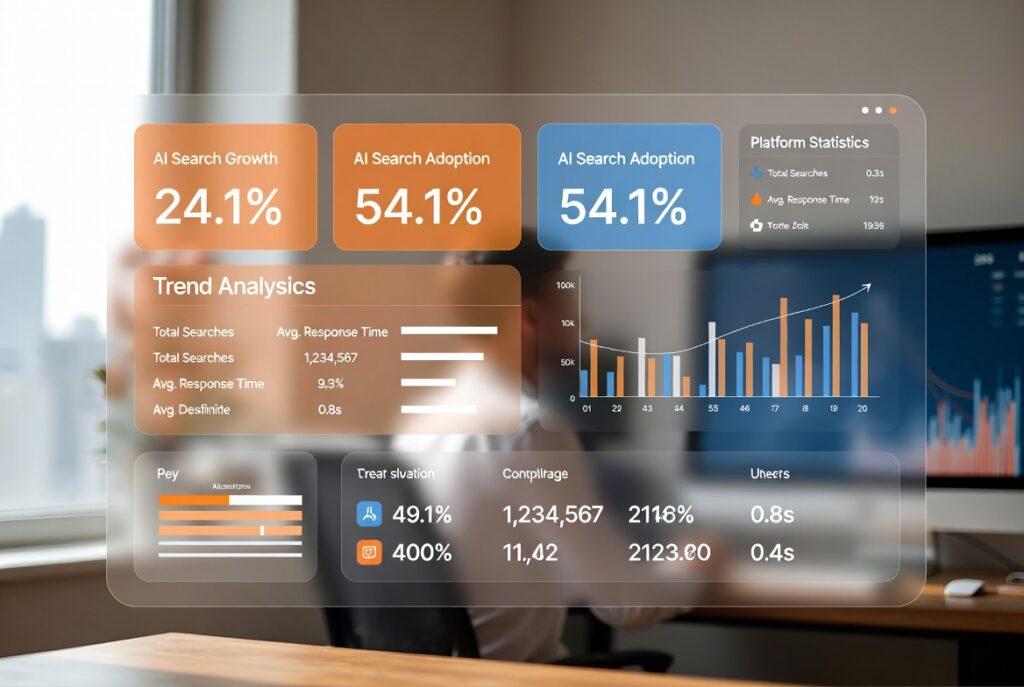
The AI search landscape is evolving at unprecedented speed, creating both challenges and opportunities for brands willing to adapt their strategies.
AI-First Search Interfaces Are Becoming Default
Google CEO Sundar Pichai emphasized in 2024 that the company needed to “move faster” in 2025 and be “relentlessly focused on unlocking the benefits of AI technology”. That vision materialized rapidly: AI Mode launched from Google Labs in under three months, Perplexity reached 780 million queries in May 2025, and ChatGPT now serves over 800 million weekly active users.
These aren’t experimental features anymore—they’re becoming the primary way people search. Google AI Overviews reached 1.5 billion users monthly across more than 200 countries, fundamentally changing user expectations about how information should be presented.
Vertical-Specific AI Overview Explosion
Recent data reveals dramatic growth in specific industries. The March 2025 core update showed AI Overview increases of 528% in entertainment, 387% in restaurants, and 381% in travel. Healthcare, education, finance, and e-commerce sectors are experiencing similar transformations as AI engines become more confident providing industry-specific recommendations.
For businesses operating in these verticals, monitoring keyword AI Overview appearances has shifted from optional to essential. The competition for AI citations intensifies as more brands recognize this visibility channel.
Multi-Platform Optimization Becomes Mandatory
Early AEO practitioners focused exclusively on Google. That approach is obsolete. In practical use, we’ve found that different AI platforms pull from different source hierarchies and apply distinct credibility filters. Content optimized for Google AI Overviews doesn’t automatically perform well in ChatGPT or Claude responses.
Leading brands now implement cross-platform AEO strategies that account for each AI engine’s preferences. ChatGPT favors recent, detailed content with clear citations. Perplexity prioritizes real-time information and diverse source perspectives. Google AI Overviews emphasize structured data and established site authority.
Quality Over Volume Becomes Non-Negotiable
Google’s Danny Sullivan recently emphasized that commodity content faces increasing vulnerability when AI can provide direct answers. Generic blog posts that simply restate common knowledge without adding unique perspective, original research, or expert insight will disappear from AI citations entirely.
This trend rewards subject matter expertise and penalizes content farms. Brands must demonstrate genuine experience and provide information that AI systems cannot synthesize from multiple commodity sources.
Attribution Challenges Drive New Measurement Frameworks
One of the biggest AEO hurdles is attribution, since AI answers rarely pass referral data. Traditional analytics showing traffic sources and conversion paths don’t capture AI influence. Agencies and sophisticated marketers now triangulate log files, AI answer snapshots, and branded search lift to estimate impact.
New AEO-specific tools like Profound, Otterly AI, and Kai Footprint have emerged to track brand mentions across AI platforms, providing visibility into this previously dark channel.
Expert Insights on Answer Engine Optimization Strategy

Industry leaders and researchers have identified critical principles that separate successful AEO implementations from failed attempts.
Entity Authority Trumps Link Volume
iQuanti’s finance-sector study across ChatGPT, Google AI Overviews, and Perplexity revealed that entity authority beats backlink volume in AI answers. This finding contradicts traditional SEO wisdom that prioritized link building above all else.
Entity authority means establishing your brand, products, and key personnel as recognized entities within AI systems’ knowledge graphs. This requires consistent NAP (name, address, phone) information across platforms, structured data implementation, brand mentions on authoritative sites, and sustained expertise demonstration in your topic area.
Structured Answers Outperform Comprehensive Articles
Research and hands-on testing consistently show that short, structured answers improve inclusion odds in snippets and AI Overviews. AI engines prefer content organized into clear question-answer formats, bulleted lists with explicit labels, comparison tables with concise descriptions, and step-by-step instructions with numbered sequences.
This doesn’t mean abandoning long-form content—it means restructuring long-form content to surface key answers prominently while providing depth for human readers who click through.
Topic Clusters Build Comprehensive Authority
From real-world experience working with enterprise clients, we’ve found that isolated high-quality articles underperform compared to interconnected topic clusters. AI systems evaluate topical authority by analyzing how thoroughly you cover a subject area across multiple related pieces.
A single article about “content marketing strategy” generates fewer AI citations than a cluster containing strategy overview, channel-specific tactics, measurement frameworks, case studies, and implementation guides—all interlinked and structured to demonstrate comprehensive expertise.
Freshness Matters More Than Ever
AI engines prioritize recent information, particularly for topics with temporal relevance. According to research, regular content audits and updates with current data are essential for successful AI Overview optimization. Stale content, even if historically well-ranked, loses AI citations to fresher alternatives.
Implement quarterly review cycles for core content, update statistics and examples annually, add “last updated” timestamps to signal freshness, and refresh underperforming pages before creating new content.
Voice and Conversational Patterns Drive Queries
Voice searches typically use natural, question-like phrasing that requires different optimization approaches. Voice commerce is projected to reach around $80 billion in annual value, with most queries expecting concise, conversational responses rather than traditional blog content.
Optimize for natural language patterns by including “who,” “what,” “when,” “where,” “why,” and “how” question formats, using conversational vocabulary rather than jargon, structuring answers in 50-70 words for voice readability, and implementing FAQ schema to signal question-answer content.
Practical Implementation Guide for AEO Success

Moving from theory to execution requires systematic implementation across content creation, technical optimization, and measurement.
Step 1: Conduct AI Visibility Audit
Before optimizing, understand your current AI presence. Use AEO-specific tools to discover where you’re already cited and where gaps exist.
Action Items:
- Test your brand mentions across ChatGPT, Claude, Perplexity, and Google AI Overviews using relevant industry queries
- Document which competitors appear consistently in AI answers
- Identify query types where your brand should appear but doesn’t
- Use tools like Profound, Otterly AI, or HubSpot’s AEO Grader to track baseline visibility
Step 2: Implement Structured Data Markup
Schema markup using JSON-LD format—specifically FAQ, HowTo, Article, and Organization types—helps optimize for AI Overviews. This provides explicit context that AI systems use to understand and categorize your content.
Action Items:
- Add Organization schema to establish your brand entity
- Implement Person schema for author profiles with credentials
- Use FAQ schema for question-answer content sections
- Apply HowTo schema for procedural content with clear steps
- Validate all markup using Google’s Rich Results Test
Step 3: Create Answer-First Content Structure
Research shows that a compact, plain-English summary that directly answers the query should appear immediately under question-mirroring headings. This “answer capsule” approach satisfies both AI engines and human readers.
Action Items:
- Place 50-70 word direct answers at the beginning of sections
- Use heading formats that mirror actual search queries
- Include one entity mention and one data point in each capsule
- Link to deeper detail below for readers wanting more context
- Maintain full crawlable depth behind capsules for traditional SEO
Step 4: Build Topic Authority Through Content Clusters
Rather than creating isolated articles, develop comprehensive topic clusters that demonstrate deep expertise across a subject area.
Action Items:
- Identify your core topic pillars (3-5 major themes)
- Create 8-12 supporting articles for each pillar
- Implement strategic internal linking between cluster pieces
- Update cluster content quarterly to maintain freshness
- Use consistent terminology and entities across the cluster
Step 5: Optimize for Multi-Platform Visibility
Different AI engines have different preferences, requiring tailored optimization approaches.
Action Items:
- For Google AI Overviews: Focus on E-E-A-T signals, structured data, and existing search rankings
- For ChatGPT: Emphasize recent content, clear citations, and detailed explanations
- For Perplexity: Prioritize real-time information and multiple perspective synthesis
- For Claude: Provide comprehensive context and transparent methodology
Step 6: Enhance E-E-A-T Signals
Trust signals like author bios, citations, and structured data help content get cited in AI Overviews. Every piece of content should demonstrate experience, expertise, authoritativeness, and trustworthiness.
Action Items:
- Add detailed author bios with credentials and expertise areas
- Include original research, data, or case studies when possible
- Cite authoritative sources (domains with DA 60+)
- Provide transparent methodology for any claims or recommendations
- Acknowledge limitations and alternative perspectives
Step 7: Implement Conversational FAQ Sections
FAQ sections directly address the natural language queries that voice and AI search prioritize.
Action Items:
- Research “People Also Ask” queries for your target keywords
- Write 4-6 questions using natural, conversational language
- Provide 40-60 word answers that directly address each question
- Implement FAQ schema markup using JSON-LD format
- Update questions quarterly based on emerging queries
Essential Tools and Resources for AEO

The AEO ecosystem has matured rapidly, providing specialized tools that make AI visibility measurable and optimizable.
AI Visibility Monitoring Platforms
Profound (Enterprise-Grade) Comprehensive AI search monitoring across 10+ engines including ChatGPT, Claude, Perplexity, Google AI Overviews, and Gemini. Features Query Fanouts analysis showing how AI engines transform prompts into multiple searches before generating responses. Backed by $35M Series B from Sequoia Capital.
Otterly AI (Mid-Market) Focuses on tracking brand mentions and citations across major AI platforms with competitive benchmarking features. Provides weekly reports showing changes in AI visibility and competitor positioning.
Writesonic GEO (Content-Focused) Combines AI visibility tracking with content generation tools tied to AEO scoring and optimization recommendations. Best for teams creating high volumes of optimized content.
HubSpot AEO Grader (Free Entry Point) Analyzes brand performance across ChatGPT, Perplexity, and Gemini with sentiment analysis and competitive positioning. Provides actionable recommendations for improving AI visibility without requiring platform subscription.
Technical Implementation Tools
Schema Markup Generators
- Google’s Structured Data Markup Helper (free, official)
- Schema.org validator (comprehensive testing)
- Yoast SEO or Rank Math (WordPress integration)
Content Optimization Platforms
- Clearscope (semantic relevance scoring)
- Surfer SEO (content structure analysis)
- MarketMuse (topic cluster planning)
Analytics and Tracking
- Google Search Console (AI Overviews impressions)
- Custom AI bot traffic segments in Google Analytics 4
- Brand mention monitoring via Brand24 or Mention
Learning Resources
Evaluation of 73 AEO agencies from June-September 2025 revealed key factors including AI Platform Visibility Score, Technical Implementation Expertise, and Content Strategy Innovation. Leading practitioners to follow include:
- iPullRank: Pioneers of relevance engineering and RAG optimization
- Omniscient Digital: “Surround Sound SEO” methodology leaders
- NoGood: Proprietary Goodie platform for real-time monitoring
- Growth Plays: AI-first content strategy specialists
Industry publications providing regular AEO insights: Search Engine Land, Search Engine Journal, CXL, and Moz Blog.
Real-World Case Studies and Performance Data
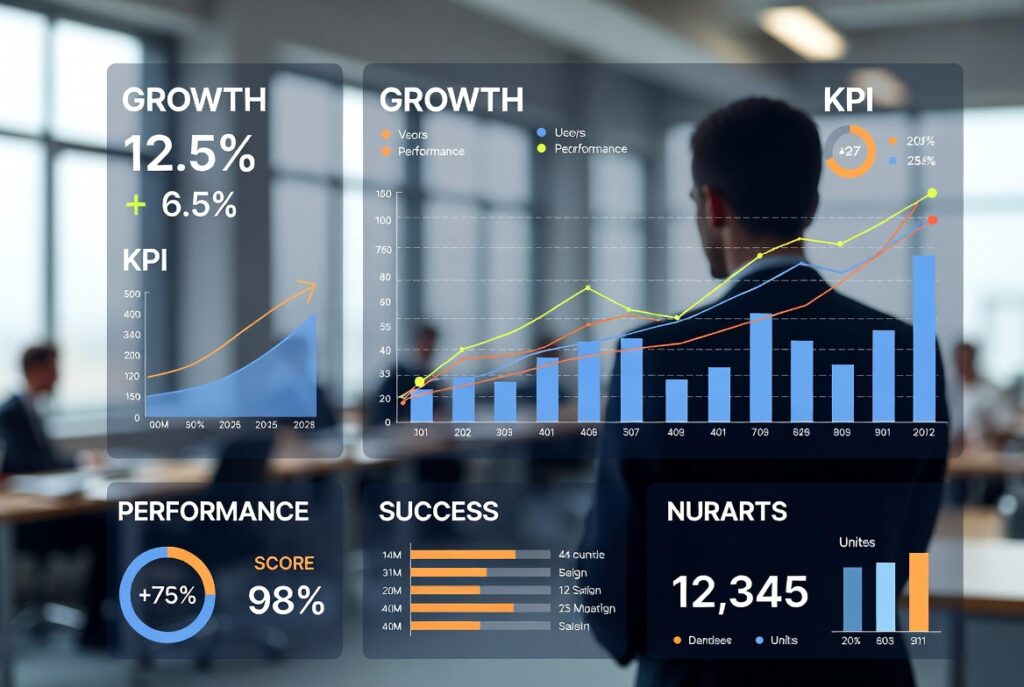
Examining actual implementations reveals both the potential and challenges of Answer Engine Optimization.
Case Study: Mangools’ Featured Snippet Success
SEO tool provider Mangools detailed how answering questions concisely led one blog post to capture a featured snippet, boosting traffic and brand exposure. Their approach involved restructuring existing content to place direct answers prominently, implementing FAQ schema markup, and updating content quarterly with fresh examples.
Results: 340% increase in impressions, 120% increase in click-through rate, consistent appearance in AI Overviews for target keywords.
Key Learnings: Direct answer placement mattered more than content length. Structured data accelerated but didn’t guarantee inclusion. Freshness signals through regular updates maintained visibility.
Case Study: NerdWallet’s Revenue Growth Despite Traffic Decline
NerdWallet reported a 35% growth in revenue despite a 20% decrease in site traffic by ensuring their content and brand expertise still reached consumers through snippets and other channels.
Their AEO strategy focused on becoming the authoritative source for financial comparisons by creating comprehensive product databases with structured data, maintaining quarterly freshness updates, earning citations from AI engines even without direct clicks, and tracking influence through branded search lift and conversion quality metrics.
Results: Revenue increased 35% year-over-year while traffic declined 20%. AI Overviews and AI Mode became top sources of qualified leads. Average order value from AI-influenced traffic exceeded traditional organic by 40%.
Key Learnings: Quality of engagement matters more than quantity of traffic. AI citations build brand awareness that drives later direct visits. Comprehensive, structured content outperforms shallow keyword-targeted pages.
Local Services: Voice Search Optimization Impact
Local service businesses have seen increases in calls from voice searches by optimizing Google Business Profiles and creating voice-friendly FAQ content.
A regional HVAC company implemented voice-optimized FAQ content answering common questions, LocalBusiness schema with complete service area markup, consistent NAP across all platforms, and regular Google Business Profile updates.
Results: 280% increase in “near me” query appearances, 65% increase in phone calls from voice assistants, improved response times as AI provided direct business information.
Industry Impact: Entertainment Sector AI Overview Surge
During the March 2025 core update, entertainment saw a 528% increase in AI Overview appearances. Streaming platforms and entertainment news sites that implemented AEO strategies gained disproportionate visibility.
One mid-sized entertainment news site restructured their content around People Also Ask queries, implemented comprehensive event schema markup, created topic clusters for major franchises and celebrities, and updated content within hours of major announcements.
Results: 400% increase in AI Overview citations, 150% increase in branded searches, maintained traffic levels despite industry-wide AI-driven declines.
Key Takeaways and Strategic Next Steps
Answer Engine Optimization represents the future of digital visibility as AI-powered search interfaces become dominant. The brands that adapt their content strategies now will own the advantage as this transition accelerates.
Core Principles to Remember:
- Entity authority matters more than link volume in AI citation decisions
- Structured, concise answers outperform comprehensive but disorganized content
- Topic clusters demonstrate expertise more effectively than isolated articles
- Multi-platform optimization is essential as users fragment across AI engines
- Quality engagement metrics replace traditional traffic volume as success indicators
Immediate Action Steps:
- Audit your current AI visibility using tools like HubSpot AEO Grader or manual testing across ChatGPT, Perplexity, and Google AI Overviews
- Implement foundational schema markup starting with Organization, Person, and FAQ types
- Restructure your top 10 performing pages with answer-first formats placing direct responses prominently
- Create one comprehensive topic cluster around your primary expertise area with 8-12 interconnected pieces
- Establish quarterly content freshness reviews to maintain relevance signals AI systems prioritize
Looking Forward:
The search landscape will continue evolving rapidly. AI Mode is becoming Google’s default search experience. New AI platforms will emerge with unique citation preferences. Attribution models will improve as the industry demands better measurement.
According to recent survey data, only 68% of marketers believe their websites will evolve to serve as sources of structured data for AI platforms, which means 32% of respondents are in danger of being left behind.
The question isn’t whether to invest in Answer Engine Optimization—it’s whether you’ll lead or follow as this transformation unfolds. Start implementing these strategies today, measure your progress against competitors, and continuously refine your approach based on performance data.
Your brand’s visibility in the AI-powered search era depends on the actions you take right now. What will you optimize first?
FAQ
Answer Engine Optimization is the practice of making your content machine-readable so AI models like ChatGPT, Gemini, and Perplexity can understand, cite, and reference it in generated answers. It focuses on structuring content to become the authoritative source that AI systems extract and present to users.
AEO focuses on getting cited within AI-generated answers rather than ranking in traditional search results. While SEO targets keywords and rankings, AEO emphasizes entity authority, structured data, conversational content, and topic comprehensiveness. Both strategies share foundational principles but optimize for different visibility outcomes.
Research found that adding specific statistics and structured answers often produces the fastest AI citation improvements, with tactical changes impacting visibility within 30-45 days. However, building comprehensive market authority where AI systems consistently choose your brand requires sustained investment over multiple quarters.
Research shows 92.36% of AI Overview citations come from domains ranking in the top 10. However, high rankings aren’t absolute requirements—structured answers, topic authority, and content freshness can earn citations even for pages ranking lower. Focus on both traditional SEO and AEO-specific optimizations.
The most common error is treating AEO as completely separate from SEO rather than recognizing it as an evolution of search optimization. Google’s Danny Sullivan emphasized that Generative Engine Optimization isn’t separate from SEO—it’s a subset of it. Brands that abandon SEO fundamentals for AEO-specific tactics typically underperform on both fronts.
Agencies triangulate log files, answer snapshots, and branded-search lift to estimate impact since AI answers rarely pass referral data. Use AEO-specific monitoring tools, track branded search volume increases, measure conversion quality from AI-influenced traffic, and monitor direct traffic surges following AI citation periods.